Saturday, April 18, 2015

Camino-ffiti


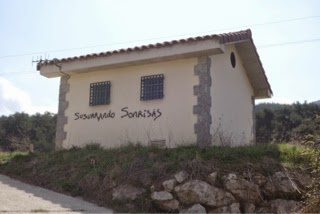
There have been some artists at work, resulting in graffiti along the Way. We'll share some of our favorites with you. The works fall into three categories:

1. Typical "Bob was here" or "Guido loves Maria" or " for a good time call..." These we are not so interested in capturing for posterity. Also not captured are typical gang-esque tagging.

2. Political statements, made by those who appear to have some anger issues towards the current Spanish government. We were aware that entire regions are interested in independence, but the feelings are stronger than we anticipated - on both sides. We have photographed some of the more family-friendly sentiments. Also of interest: we find these messages written in English and in Spanish. 


3. Supportive art & words of encouragement, by both locals (we assume) and pilgrims (the attribution is more obvious). 

Surprising Camino Discoveries


After eleven days of walking here are some things we've learned (in no particular order)...

An omelette sandwich (eggs, onion, peppers on a baguette) made in the morning turns out to be a great, filling, protein packed lunch! Cold eggs on bread - who knew?

A determined cow can jump over a cattle guard with aplomb - we watched one sassy girl outrun her owner & a cow dog in the process.

In the mountains there exists the tiniest daffodil/narcissus you ever did see. The flower head was smaller than a dime.

Tiny towns in Spain have the coolest playgrounds with equipment for kids and parents. Some of them are to help you work out, others massage your back or shoulders. Some are made of ropes and some are just for jumping. 


When you don't really know what your dinner choices are (beyond knowing basic words like pork, chicken, beef, fish, vegetable, etc.) ask the server/cook which one is best or more typical of the region. They are so glad to show off the house or regional specialty to a pilgrim who wants more than "nuggets of chicken." Ask for the "mas tipico" and you end up with delicious surprises like ribs cooked over an open fire, pork slow roasted with red peppers and garlic or a plate full of yummy artichokes.

Discovering that a dessert of sheep milk curd and honey (cuajada) is not only good and refreshing, but becomes your first choice!

It turns out that with proper bandages, Tylenol, Advil & Stop Pain you can walk 20k with a dozen blisters on your feet. 


Ear plugs are an indispensable item when sleeping in a bunk room with a lot of strangers. Assuming you actually want to sleep. You might think you are dead tired, but a room full of humans can be NOISY...

A little kid giving you directions because they are afraid you are about to miss a turn in their town is pretty awesome. Especially when he is directing you to the wine fountain. "It is free. Go there and drink it in."  Well, okay. 


You are not so picky about wine when it's a free gift.

Walking from snowy mountains into blooming springtime is gorgeous.


We knew ham (aka: jamon) was a big deal here, and it is everywhere, but there are even jamon flavored potato chips! Haven't tried those yet.


The oranges here are SO very good. Plus, fresh squeezed juice-YUM!

The variety of pilgrim bathroom set-ups seems to be infinite. We have learned the importance of being able to shower in the dark in case the 2&1/2 minute long light on a timer goes off while you are soapy and wet. Also, it is possible to get pretty clean in a shower that is smaller than 2 square feet! Who really needs a shelf, a hook, or even a curtain? If you are hot & sweaty & exhausted, you can surely work it out with ease, right?

The number of people who welcome us into their town, home, etc. also pretty amazing. Fun delivery drivers tooting their horns, commuters who have practically slammed on their brakes for you in a crosswalk wishing you a 'buen viaje,' two old men on a park bench working out where we should go for the best dinner in town....

An 8:30 bedtime can be SUCH a great thing!


Tuesday, April 14, 2015

Quick Camino Update

After a week of walking, we can report that a typical day on the Camino looks like this:

Wake up (before dawn - earlier if your bunkmates want to start walking before dawn)

Treat blisters, etc., brush teeth & hair, get dressed (hope your clothes are dry from washing the night before)

Eat "typical Spanish breakfast" of coffee, bread, butter and jam

Put on loaded back pack and begin walking (usually 7:30-8:30am)

2-4 kilometers later, stop for coffee/tea & tortilla España (a potato/egg omelette kind of thing) which comes with more bread

Walk more (walking may include awesome views, big cities, picturesque Spanish villages, conversations with people from all over the world, periodic snacks, a few tears, the occasional pep talk, some singing, lots of prayer, birdsong & rivers,  and humbling spots where you can only keep going with the help of others)


When you can walk no longer (usually from 3-5pm) push through to the next town with a place to stay (albergue) - which can include 2-30 other people in bunks. Check in, get your credential stamped, leave your boots on the shelf with others, put on other shoes (feel your feet rejoice) find your bunk.
Shower (and give thanks for indoor, heated plumbing!)

Wash clothes from the day (usually by hand) & hang to dry

Find a snack, take a breath, stretch, deal with blisters/sunburn

Run errands - fruit, cheese, nuts for road/sunscreen, Tylenol, etc...

Find out about dinner - at albergue or local bar/restaurant - usually around 7pm & usually "pilgrim's menu" of an appetizer, a main dish (often served with fries), sometimes a dessert, always with bread & wine for about 8-12 €.

Get ready for bed (usually around 8:30-9:30pm) -  and plan to upload pictures & work on the blog tomorrow if the albergue has wifi.

Think about those you love and say a prayer for them, realize how grateful you are for all you saw & experienced today, write in journal till you fall asleep.


Thursday, April 9, 2015

Easter (a day early)

Today we boarded a train at 8:00 am to begin our journey across northern Spain. Last night we welcomed the arrival of Easter by traveling a short distance to Chinchón to watch their annual Passion play. 
(This photo shows where they staged the Last Supper.)

The previous night we had the good fortune of seeing one of Madrid's Semana Santa processions right below our apartment window. No crowds to fight, and we could see the procession, albeit one of the shorter ones, in its entirety. We watched as Jesus' crown of thorns, then nails, were carried by, followed by Jesus himself, interred, and a traditional Spanish funeral procession, concluded with a band (from Chinchón), and - of course - the Blessed Virgin Mary. 
(Mary wearing a sunburst golden crown and royal robe,surrounded by lillies and candles.) 

The past few days in Madrid & surrounds (Toledo and San Lorenzo El Escorial) have been simply beautiful. Perfect weather - cool in the slow mornings, sunny and warm without much humidity during the long afternoons, and the most beautiful, clear blue skies. We have eaten amazing meals and drunk delicious sangria in a variety of locales. 

We feasted yesterday in celebration of the the Holy day in an ordinary restaurant on Chinchón's Plaza Mayor. Even though we arrived before noon and were hoping to secure a table outside, none seemed available...until we were invited to the balcony. White linens were set for our Menu del Día. A jug of house wine, large helpings of grilled meats (lamb chops &pork medallions) - not to mention the white asparagus spears and Spanish migas. 
Migas in España
White asparagus salad
Easter Feast - everything comes with fries!

Slowly, we savored our generous servings of custard/pudding, because we were reluctant to leave our table with a view of this amazing town. All day we were delighted with smells of olive oil, anise, garlic, rosemary, grilled meats and fresh air. What a way to welcome in Easter - and send us on our pilgrimage. 
Good to the last bite!

Our view from the balcony - you can see the area where they staged the crucifixion and the resurrection was portrayed with the stone church above the plaza serving as the tomb.

Much like native Spaniards, we got little sleep last night (Holy Saturday), as we packed our backpacks with all but our few items of clothes we washed and hung to dry. As we exited our perfectly located apartment at 6:15, we joined in with the all-night partiers stumbling home before dawn. 

Buen viaje y buen camino

Monday, April 6, 2015

Semana Santa Processions

Holy Week in Spain is a public occasion. In the south, especially Seviile, the crowds and events are large and non-stop. While the Madrileños we spoke with apologized that they don't do as much - it was still PLENTY for us! We arrived in Madrid on Monday night tired from travel. After settling into a rented apartment our only stop was the grocery store. 

Our host had picked up some information for us about the processions for which Spain is known. He, too, apologized that there wasn't more happening before handing us the keys and wishing us well. I have to say I can't really imagine what Seville is like this time of year if people think this week was no big deal. 

We were staying just off of the Plaza del Sol, which is truly in the middle of it all. Of the many processions that occurred this week we were able to make it to three of them - all of which went through the plaza, one of which (to our delight) went right down our street. The first was on Wednesday night. We knew it started a few blocks away at 7:30pm. So we made our way to the plaza around 7 and found a spot near a lamppost with a base that allowed us a bit of height for pictures. There was no hope for a seat as any spot near the base of the fountains, on the railing for the metro, etc. was taken. Then we waited. And waited some more. People just kept coming. The plaza is a little larger than a New York city block and soon it -and all of the surrounding sidewalks and curbs - were FULL. This plaza is ALWAYS  buzzing with life from about 3pm-5am. (Yes, you read that right - Spain is the motherland for night owls!) In fact looking out our balcony window was like watching a busy anthill most hours of the night. But the procession crowd wasn't moving so much - just filling in every single square inch of space (except the small areas marked off by police and ambulance personnel). 
Finally, at about 8:30 we began to hear thie drums and the band, and by 8:45 we could see candles glowing in the street. We watched with the crowd until after 10pm when the procession continued on - it was only halfway through its route when it departed our plaza. They must have marched well into the early morning hours.

These processions are led by various groups from churches and religious orders. They wear robes, and often hoods, and carry banners and TALL silver or gold candles, sometimes a cross of either wood or metal is also at the beginning. 
Then there are LARGE images of Christ or the Virgin Mary on platforms that are at least 7x4 feet. They are COVERED in decoration: gold and silver ornamentation, beautiful flowers, rich fabrics, statuary and candles. - so many candles. These are most often carried by 8-10 people, much like pall bearers carrying a casket. They are followed by a brass band with drummers who play a steady beat for most of the procession, playing somber songs at certain points. (There was apparently one on Saturday that was silent, but the others had drums and music.)


Some of the processions included other elements. One had young people carrying two velvet pillows, one bearing three nails, the other a crown of thorns. One of them was walking bare foot through the streets with chains on the ankles. 

Another procession stopped at the plaza to burn incense. Then the Christ figure, carrying a cross, was brought to the part of the plaza that has a memorial plaque for those who were killed in the Al Quieda bombings in Madrid in 2004. The procession stopped, and with Christ facing the memorial a member of the group ascended a ladder and laid flowers at te base. There was a moment of holy silence in that crowd of thousands, and many of us swallowed tears, then applause came from the crowd as the group resumed the procession, turning the figure of Christ and proceeding down the road. 
While being in those crowds gave us a better understanding of how easily one might be trampled as you leave, we were both glad to have had the chance to experience this kind of corporate observance first hand. We expected it to feel a bit more 'touristy'. While we are believers this kind of public pageantry and the kind of crowd that draws guys selling glow in the dark toys to children and watches or sunglasses to their parents seemed a bit much for Holy Week. Bit we wanted to see how the Spanish observe this season. What we found is that yes, there are tipsy teenagers and people trying to make a buck from the crowd, but the streets of the city became holy ground as people of all ages prayed and stood silent and reached out to kiss the statuary of Christ and Mary as they went past. The quiet, almost still moments between the pushing crowd and the crying children and the hurrying off to party all night were brief - but they were there. You could feel the energy of all the people as the drumbeats grew closer, and the reverence was tangible once the figures were in sight. And when in a simple pause to lay flowers at a memorial a link between resurrection hope was made with the faith of the people and the very real suffering of their fellow citizens all of us present couldn't help but be moved. It has truly been a Holy Week.


How do you find the way?

The Camino de Santiago (Way of St. James, Way of Jakob, Chemin St. Jacques...or whatever name it might be called in other languages) has been travelled for centuries, so you might think getting to one of its starting points would be simple. The thing is, people go all the time, and everyone says,"don't worry, you'll get there."  But the directions are not easy. And we made it harder by starting in Madrid. 

For one thing you can't buy train tickets for Spain online in the USA. So one of the first outings in Madrid was to the main train station to obtain tickets back to France. At the train station you take a number and wait, hoping that the train you want (on Easter Sunday afternoon) won't be full. If it is, you settle for the moning train, grateful that you planned to go see a passion play on Saturday since you now won't be able to attend services on Sunday.

Then, because the train will only take you right across the border, you start trying to find a way to get from that town to the one where the Camino starts. That is when everyone tells you that the train tracks were washed out last year and you'll need to take a bus (which you actually knew from researchIng this route from home...) However, no one can book this mysterious bus- or the train that gets you to the bus - for you. Again you hear, "don't worry, you'll get there."

So, grateful that you booked a place to stay in the town across the border, you get on the train hoping that the mysterious train/bus combo will be available, because everything you can find online says that all seats are booked. But the people who work for the companies, and the folks who've gone before all say that can't be right and, "don't worry, you'll get there."
At least we'll be in France?

You make it across the border and speak to the information person who says that of course they have many trains that can get you as far as Bayonne, but you'll then need a bus. At this point you think, right, we get that part...but how do you get on the BUS?!?! When you calmly ask, he looks at you like you are a complete fool and points to the ticket office while saying that of course you just go buy a ticket. 

You take a deep breath and can hardly believe you've found the mysterious place that actually sells the tickets. You are sold a ticket for a 9am train to Bayonne, connecting with a 10:30am bus to St. Jean Pied du Port - hallelujah! you think. But then when you arrive in Bayonne the illusive bus has again vanished! The people at that station look at you (and the other pilgrim you met on the train) as though you are completely confused as she explains that the bus won't arrive until 3pm. But she says, "don't worry, you'll get there."

So you spend the day chatting with the nice German who is also headed off on the Camino. You give thanks for bars open on the national holiday of Easter Monday that will serve coffee to pilgrims waiting for the bus (not to mention providing a clean public bathroom!). You give thanks also for the bakery open on a national holiday that provides you with an amazing sandwich and Easter chocolate to boot. Then you wait, and give thanks for towns with walking paths by the river, public plazas with fountains, and free wifi in the train station. Then you eat the last of the oranges you bought from Spain and rejoice as you board the bus so that you can go to St. Jean, get your pilgrim credential, find the perfect place to welcome you for the night, and begin the walk tomorrow. Turns out there was no reason to worry. In the end, we all got there after all.
The first albergue of the journey welcomed us with tea and molasses cake after our crazy train/bus day to get there!

Sunday, April 5, 2015

El Escorial & Toledo


Madrid is a city that is full of energy and we are staying right in the middle of the old city. Because it is Holy Week (en español: Semana Santa) there are special events happening and lots of the usual tourist stops have limited hours. In order to see a bit more of this region, enjoy the quieter countryside, and to fill days which in other times of the year might have been jam packed with museums and tours, we have taken a few day trips. 

The first was to San Lorenzo de El Escorial. It is a lovely place, named for the saint on whose feast day the King of Spain enjoyed a military victory. St. Lawrence/San Lorenzo died a gruesome death - burned on a gridiron. So the king had the town and the palace/cathedral complex designed in that shape, incorporating lots of crosses in the design as well. It was fascinating to see the details of the architecture in what is now a museum. After having visited Versailles in France, it was interesting to see a different kind of palace complex. The art, architecture, gardens and grounds are impressive in both locations. The town is also quite beautiful and the ride out from Madrid afforded us wonderful views of the area. 

We spent the following day in the medieval city of Toledo. It was Spain's capitol city prior to Madrid. The city and it's buildings have been influenced by many peoples over time, including all three of the Abrahamic faiths, and you can still see the effects of all its former inhabitants. We were greeted at the train station by Moorish windows, tiles and so much color! 

The old city sits atop a hill surrounded by a river. The walk up (and I do mean UP - it was indeed a good location for defense!) to the top has gorgeous views of the river, and includes bridges and walkways that truly make you feel as though you are walking into history. 

The Alcazar sits at the top of the hill. After multiple incarnations it has been turned into a Spanish military history museum. While we were less excited about suits of armor, guns, etc., we were VERY intrigued by this place that has been built, damaged, rebuilt, remodeled, and claimed by so many for so long. It is an amazing building. And it was impressive to see a display of the swords crafted in Toledo, as well. For many years this city was home to artisans who produced beautifully crafted weapons. The intricate woke done on handles and blades is astonishing - indeed works of art. Interestingly, there is a sculptural mural outside of the Alcázar that depicts warfare, then the sword being relinquished to an angel, then eventually a figure plowing the land ... the work's theme depicts turning swords into plow shares. After spending the morning immersed in war history, we were left longing for the day that we would indeed expend as much energy and artistic effort toward feeding our brothers and sisters. 

At the conclusion of our day trips, we were glad to have taken the opportunity to see and soak up some of Spain's long & complicated history. Surely our brief and elementary education will help us understand the significance of some of our travels as we make our way across this beautiful land.